


Type
Abdomen MRI
Duration
35 min
What's included
4 deliverables in this treatment
- Multi-phase Philips 3 Tesla liver MRI with gadolinium contrast (arterial, portal, delayed phases)
- Diffusion-weighted imaging (DWI) for lesion characterisation
- Radiologist interpretation and written report (LI-RADS where applicable)
- Digital image transfer via ePACS and Redimed
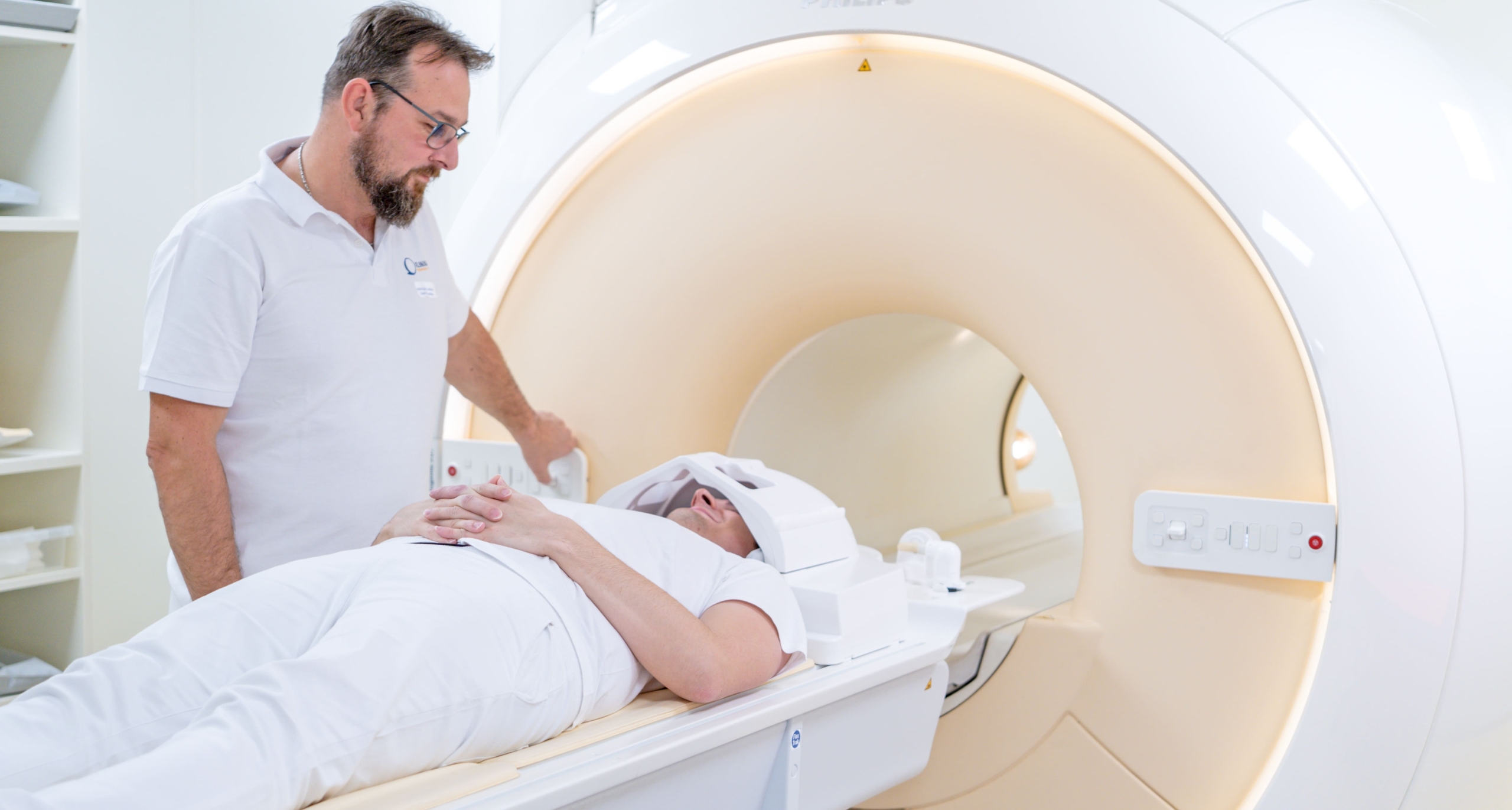
Liver MRI at Klinika JL uses the Philips 3 Tesla scanner with gadolinium contrast to provide definitive characterisation of liver lesions — distinguishing benign haemangiomas, focal nodular hyperplasia and adenomas from hepatocellular carcinoma and metastases in a way that ultrasound and CT cannot reliably achieve. Dynamic contrast sequences capture arterial, portal venous and delayed phases of enhancement, which are the hallmark pattern that identifies HCC. 3 Tesla field strength enables diffusion-weighted imaging (DWI) that adds functional information about cell density. Self-pay patients pay 9,000 Kč plus contrast. Three-to-four hour fasting before the scan reduces bowel motion artefact.
About this treatment
MRI is the gold-standard imaging modality for liver lesion characterisation, superior to CT for differentiating HCC from other focal liver lesions in the setting of cirrhosis and for detecting small metastases in colorectal cancer follow-up. At Klinika JL the Philips 3 Tesla scanner performs a multi-phase dynamic study: unenhanced T1 and T2 sequences establish baseline, then gadolinium is injected intravenously and the liver is imaged in the arterial…
Diffusion-weighted imaging (DWI) acquired at multiple b-values adds functional information: restricted diffusion (high signal on high-b-value images, low ADC value) indicates hypercellular tissue — malignant or inflammatory — and is used to detect small lesions below the resolution of structural sequences and to characterise large lesions.
Four-year follow-up protocols for cirrhotic patients (biannual ultrasound, annual or biannual MRI) rely on the reproducibility of measurements at the same field strength; the clinic's Philips 3 Tesla system provides a stable reference for interval comparisons.
Good to know
- Field strength
- 3 Tesla (Philips)
- Contrast
- Gadolinium IV, multi-phase dynamic (required)
- Preparation
- 3–4 hours fasting before the scan
- DWI
- Included — adds functional characterisation
Who is this for?
Liver lesion characterisation, HCC staging in cirrhosis, colorectal cancer liver metastases, haemangioma vs adenoma vs FNH differentiation, hepatology follow-up
Preparation required
Fast for 3–4 hours before the exam (clear water is allowed). Remove all metal jewellery and items. Bring your referral and any prior abdominal imaging (CT, ultrasound). Inform staff of any kidney disease — eGFR needed if renal insufficiency is known. Gadolinium is contraindicated with severe renal disease. Drink extra fluids after the scan to clear the contrast agent.
About the clinic
Reviews, team and credentials
Independent review links and clinic-reported team information.
Clinical team
Klinika JL MR is staffed by experienced radiologists and radiology assistants operating under the Innova Healthcare group. Reporting radiologists hold Czech medical board qualifications in radiodiagnostics and interpret all 3 Tesla MRI studies with written findings delivered within the regulatory timeframe. The team covers the full spectrum of MRI modalities including neuroimaging, musculoskeletal, abdominal, pelvic…
Languages: Czech, English, German, French, Spanish, Ukrainian, Russian, Vietnamese
Treatment highlights
- Multi-phase Philips 3 Tesla liver MRI with gadolinium contrast (arterial, portal, delayed phases)
- Diffusion-weighted imaging (DWI) for lesion characterisation
+2 more items in What's included
9,000 Kč per scan for self-pay patients (900,000 minor units), plus 2,000 Kč for gadolinium contrast (required for liver characterisation). Total typical self-pay: 11,000 Kč. Covered by all major Czech health insurers on a gastroenterology or hepatology referral. Requires 3–4 hours fasting before the exam.