


Type
Pelvis MRI
Duration
45 min
What's included
4 deliverables in this treatment
- Philips 3 Tesla multiparametric prostate MRI (T2, DWI, DCE) with gadolinium contrast
- PI-RADS v2.1 scoring of suspicious lesions
- Evaluation of seminal vesicles and extracapsular extension
- Radiologist interpretation and written report with digital image transfer
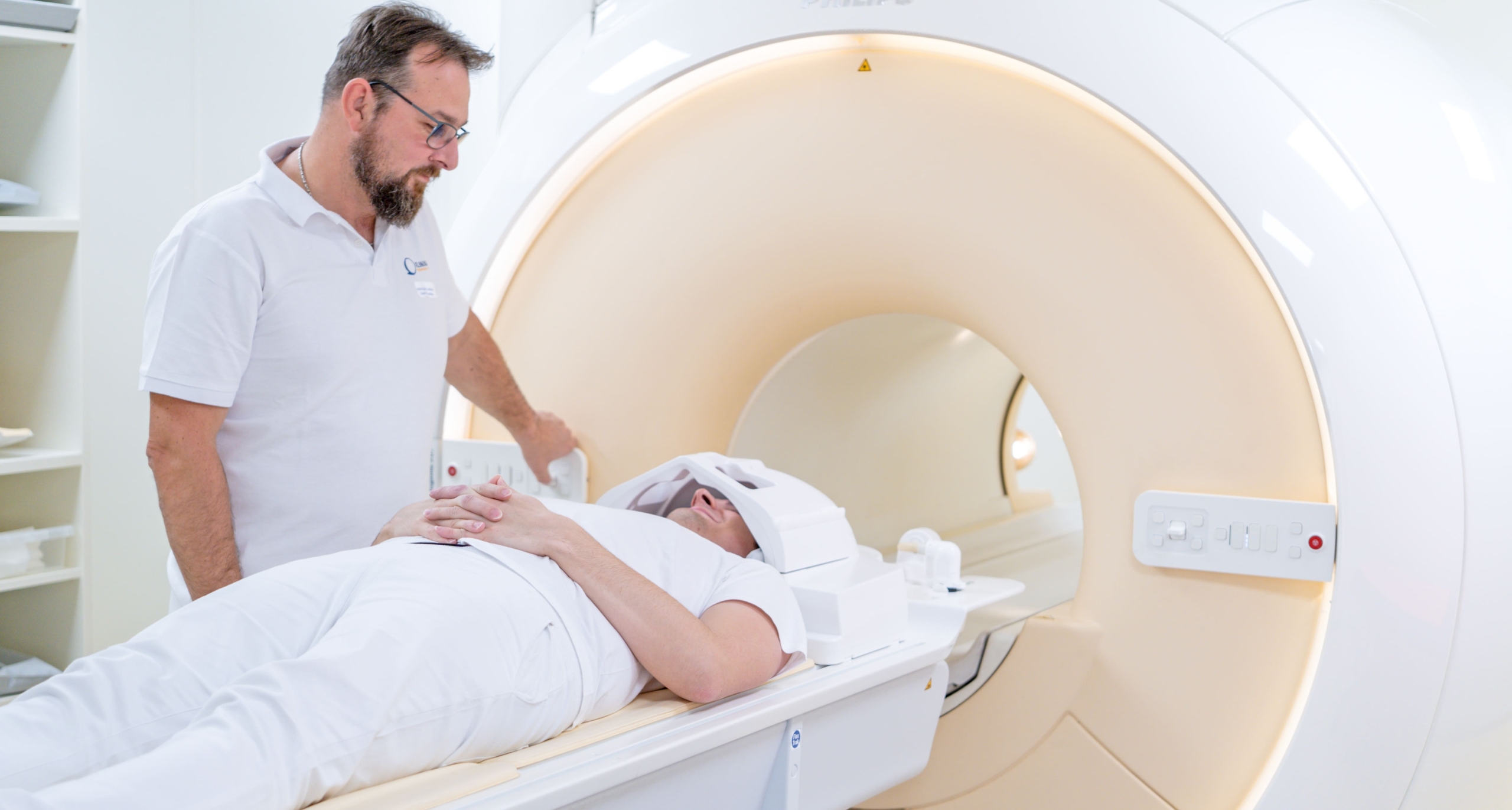
Multiparametric prostate MRI (mpMRI) at Klinika JL is the gold-standard imaging investigation for prostate cancer detection and staging, performed on the Philips 3 Tesla scanner with gadolinium contrast. The exam combines T2-weighted anatomical sequences, diffusion-weighted imaging (DWI) and dynamic contrast-enhanced (DCE) sequences to assign a PI-RADS score (1–5) to any suspicious lesion — guiding the decision between surveillance, targeted biopsy and treatment. At 3 Tesla without an endorectal coil, image quality is sufficient for PI-RADS scoring in most patients. Self-pay price is 9,000 Kč plus contrast. The clinic is open daily until 21:00 for urgent urology referrals.
About this treatment
Multiparametric prostate MRI (mpMRI) has become the recommended first investigation before biopsy in men with elevated PSA or abnormal digital rectal examination, endorsed by EAU (European Association of Urology) guidelines. The Philips 3 Tesla scanner at Klinika JL acquires the three parameter families required for a complete mpMRI study:
- 1 T2-weighted sequences (sagittal, coronal, axial) at high resolution assess the zonal anatomy of the prostate — peripheral zone (PZ), transition zone (TZ), central zone — and identify morphological abnormalities: low-signal foci in the PZ (suspicious for significant cancer), ill-defined nodules in the TZ (differentiating BPH nodules from TZ cancer), extracapsular extension (ECE, a staging criterion), and seminal vesicle invasion (SVI, T3b).
- 1 Diffusion-weighted imaging (DWI) with multiple b-values (including a calculated ADC map) detects hypercellular cancer by restricted water diffusion — cancer has lower ADC values than normal prostate tissue. DWI is the most heavily weighted parameter in the PI-RADS v2.1 scoring system for the peripheral zone (where most significant cancers arise).
Good to know
- Protocol
- Multiparametric (T2 + DWI + DCE), PI-RADS v2.1
- Field strength
- 3 Tesla (Philips), no endorectal coil required
- Contrast
- Gadolinium IV (required, +2,000 Kč)
- Duration
- 40–50 minutes
Who is this for?
Pre-biopsy PSA elevation workup, active surveillance re-assessment, Gleason ≥7 cancer localisation before focal therapy, post-radical prostatectomy recurrence detection
Preparation required
A rectal enema the morning of the exam may be recommended to reduce artefact — the booking team will advise. Remove all metal items. Bring your urology referral, PSA history, any prior prostate biopsies or imaging reports. Avoid vigorous cycling or perineal pressure in the 2 days before the scan (can elevate PSA and cause pelvic signal changes). Gadolinium is contraindicated with severe renal insufficiency. Drink extra fluids after the scan.
About the clinic
Reviews, team and credentials
Independent review links and clinic-reported team information.
Clinical team
Klinika JL MR is staffed by experienced radiologists and radiology assistants operating under the Innova Healthcare group. Reporting radiologists hold Czech medical board qualifications in radiodiagnostics and interpret all 3 Tesla MRI studies with written findings delivered within the regulatory timeframe. The team covers the full spectrum of MRI modalities including neuroimaging, musculoskeletal, abdominal, pelvic…
Languages: Czech, English, German, French, Spanish, Ukrainian, Russian, Vietnamese
Treatment highlights
- Philips 3 Tesla multiparametric prostate MRI (T2, DWI, DCE) with gadolinium contrast
- PI-RADS v2.1 scoring of suspicious lesions
+2 more items in What's included
9,000 Kč per scan for self-pay patients (900,000 minor units), plus 2,000 Kč for gadolinium contrast (required for multiparametric protocol). Total self-pay: 11,000 Kč. Covered by all major Czech health insurers on a urology referral. PI-RADS v2.1 reporting standard used.