


Type
MRI Scan
Duration
45 min
What's included
4 deliverables in this treatment
- Philips 3 Tesla fetal MRI with rapid single-shot T2 and T1 sequences (no contrast)
- Multi-plane acquisition calibrated to fetal anatomy (brain, body, chest, abdomen)
- Radiologist interpretation with fetal measurements referenced to gestational age norms
- Written report sent to referring maternal-fetal medicine team
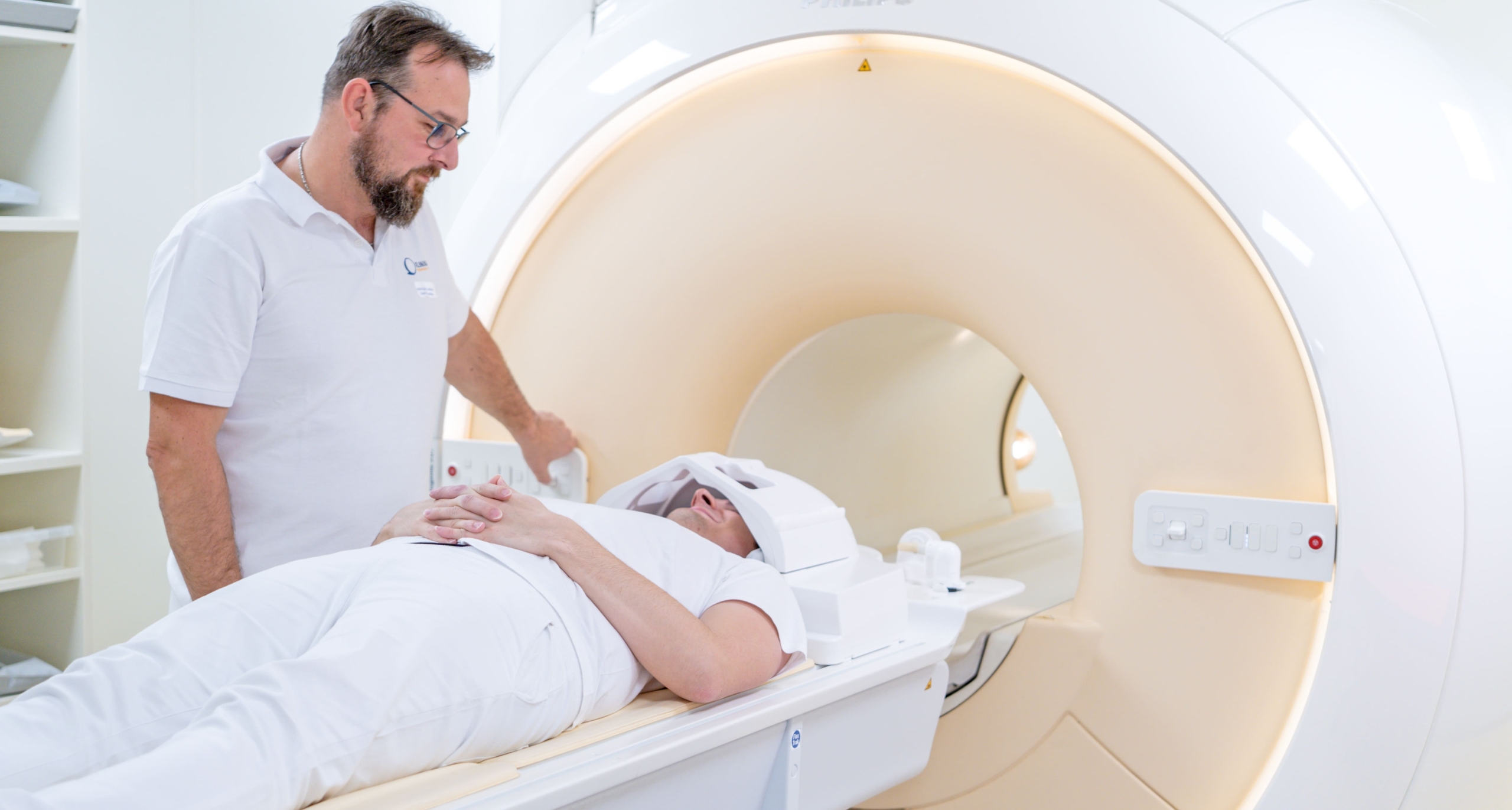
Fetal MRI (MR plodu) at Klinika JL is a specialised obstetric imaging study performed after 12 weeks gestation to evaluate fetal anatomy in cases where ultrasound is inconclusive — most commonly for central nervous system anomalies (ventriculomegaly, corpus callosum agenesis, cortical malformations), lung masses, diaphragmatic hernia and abdominal organ anomalies. At 15,000 Kč self-pay it is the most complex and highest-priced study on the clinic's list. No contrast is used. The Philips 3 Tesla scanner acquires rapid sequences designed to freeze fetal motion. The clinic requires a full bladder at the time of scan and a referral from a maternal-fetal medicine specialist or obstetrician.
About this treatment
Fetal MRI (MR plodu) at Klinika JL is the clinic's most specialised and highest-priced examination at 15,000 Kč, reflecting the complexity of the protocol, the need for rapid acquisitions to cope with fetal movement, and the dedicated time required for reporting fetal anatomy in up to 20 organ systems. The study is performed from 12 weeks gestation onwards — not in the first trimester — and without gadolinium contrast.
The primary indication worldwide for fetal MRI is central nervous system anomalies detected or suspected on ultrasound. MRI exceeds ultrasound for brain sulcation and gyration assessment (cortical development maturity), corpus callosum and posterior fossa evaluation (Blake's pouch cyst vs Dandy-Walker vs mega cisterna magna distinction), ventriculomegaly grading and aqueductal stenosis, and periventricular and cortical heterotopias. These findings…
Other major indications include: congenital lung lesions (CPAM/CCAM vs bronchopulmonary sequestration), diaphragmatic hernia (lung volume measurement on MRI predicts postnatal survival better than O/E LHR on ultrasound alone), abdominal wall defects (gastroschisis vs exomphalos, liver position), renal anomalies (bilateral renal agenesis, MCDK, duplex kidney complications), sacrococcygeal teratoma extent, and placenta and cord anatomy when ultrasound is…
Good to know
- Gestational age
- After 12 weeks only
- Contrast
- None — no gadolinium in pregnancy
- Primary indication
- CNS anomalies, lung lesions, diaphragmatic hernia
- Duration
- 30–60 minutes depending on fetal position
Who is this for?
Ventriculomegaly, corpus callosum agenesis, cortical malformations, posterior fossa anomalies, congenital lung masses, diaphragmatic hernia lung volume, sacrococcygeal teratoma, bowel obstruction assessment
Preparation required
Drink approximately 500 mL water 1 hour before the scan — a comfortably full bladder improves lower uterine visualisation. Come prepared to lie still and practise brief breath-holds (8–15 seconds) during the scan. Bring your referral from a maternal-fetal medicine specialist or obstetrician with the documented gestational age and sonographic findings. No gadolinium will be used. This study is not performed in the first trimester (before 12 weeks).
About the clinic
Reviews, team and credentials
Independent review links and clinic-reported team information.
Clinical team
Klinika JL MR is staffed by experienced radiologists and radiology assistants operating under the Innova Healthcare group. Reporting radiologists hold Czech medical board qualifications in radiodiagnostics and interpret all 3 Tesla MRI studies with written findings delivered within the regulatory timeframe. The team covers the full spectrum of MRI modalities including neuroimaging, musculoskeletal, abdominal, pelvic…
Languages: Czech, English, German, French, Spanish, Ukrainian, Russian, Vietnamese
Treatment highlights
- Philips 3 Tesla fetal MRI with rapid single-shot T2 and T1 sequences (no contrast)
- Multi-plane acquisition calibrated to fetal anatomy (brain, body, chest, abdomen)
+2 more items in What's included
15,000 Kč per scan for self-pay patients (1,500,000 minor units) — the highest-priced examination at this clinic, reflecting the specialised protocol and dedicated reporting time. No contrast agent used. Covered by all major Czech health insurers on a maternal-fetal medicine or obstetric referral. Not performed before 12 weeks gestation.