


Type
Brain MRI
Duration
40 min
What's included
4 deliverables in this treatment
- Philips 3 Tesla brain MRI with standard parenchyma sequences
- MR angiography of intracranial and cervical vessels with gadolinium contrast
- Radiologist interpretation and written report
- Digital image transfer via ePACS and Redimed networks free of charge
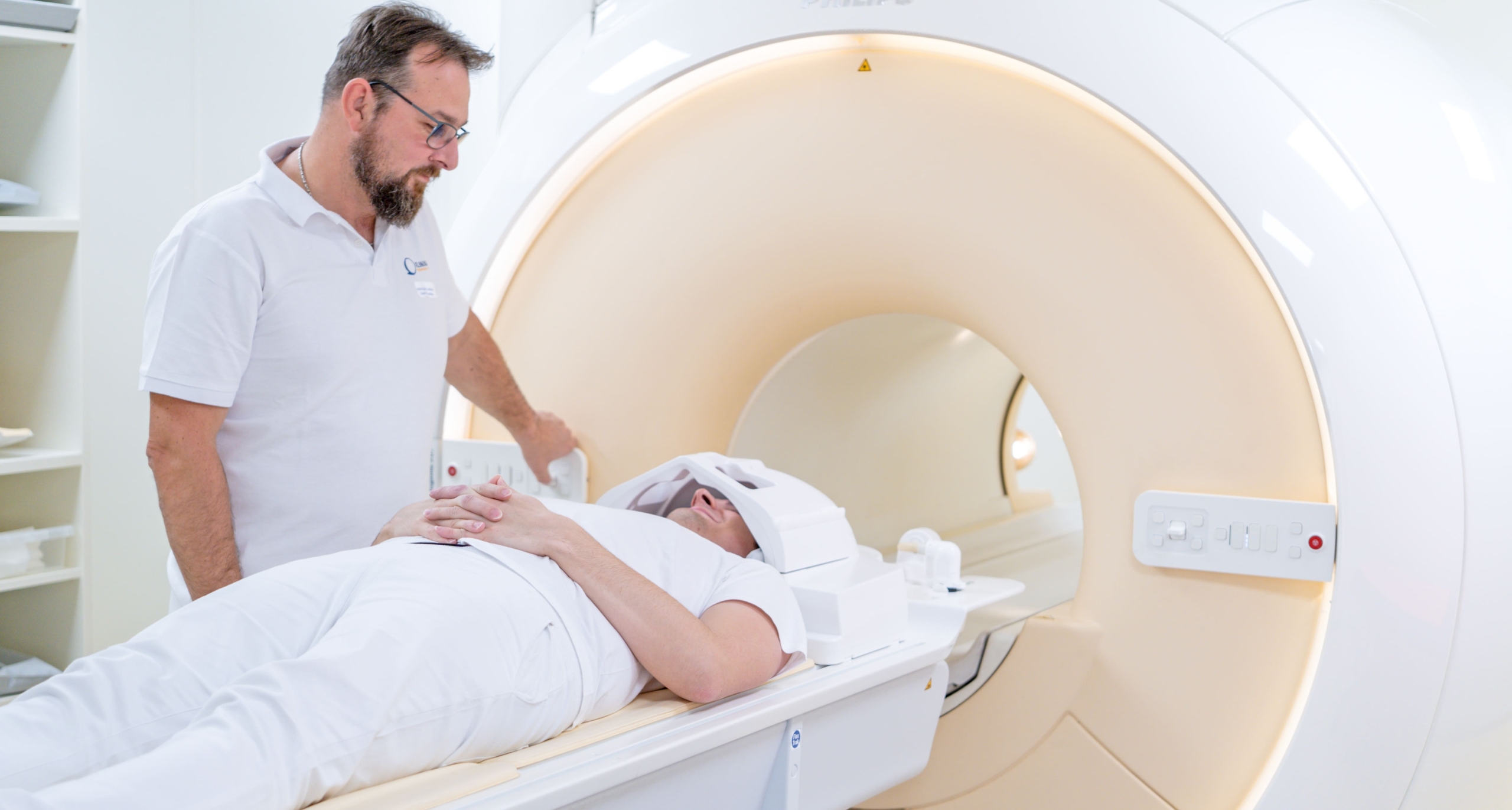
MRI Brain with Angiography combines a standard brain parenchyma study with MR angiography (MRA) in a single session on Klinika JL's Philips 3 Tesla scanner. MRA maps the intracranial arteries and veins without the need for arterial catheterisation, showing the calibre, course and wall integrity of the cerebral vessels. This combined protocol is the first-line investigation for suspected aneurysm, arteriovenous malformation, carotid stenosis and other cerebrovascular conditions where the anatomy of both brain tissue and its blood supply needs to be assessed together. Gadolinium contrast is required. The clinic runs seven days a week until 21:00, allowing prompt imaging when a vascular referral is urgent.
About this treatment
The MRI brain-plus-angiography protocol at Klinika JL adds MR angiography sequences to the standard brain parenchyma study, capturing both the brain tissue itself and the intracranial and cervical vessels in one continuous examination on the Philips 3 Tesla scanner. MR angiography (MRA) exploits the flow properties of blood — or, in contrast-enhanced MRA, the T1 shortening effect of gadolinium — to produce bright, high-resolution images of arteries and…
The combined protocol is clinically indicated when the referring physician needs to assess both parenchymal pathology and the vascular supply in one visit: for example, a subarachnoid haemorrhage workup where a ruptured aneurysm must be located, a transient ischaemic attack evaluation where carotid or intracranial stenosis is suspected, or a brain tumour case where feeding vessels need to be mapped before surgery. The session takes approximately 30–45…
Gadolinium contrast agent is administered intravenously and is required for the contrast-enhanced MRA component. After the scan, increased fluid intake helps clear the contrast agent via the kidneys. Contraindications are the same as for all MRI studies at this clinic: pacemakers, cochlear implants, defibrillators and metallic eye fragments are absolute contraindications; implants and joint prostheses require documentation for safety assessment. Severe…
Good to know
- Protocol
- Brain MRI + MR angiography (single session)
- Field strength
- 3 Tesla (Philips)
- Contrast
- Gadolinium IV (required, included in price range)
- Duration
- 30–45 minutes
Who is this for?
Suspected aneurysm, AVM, carotid/intracranial stenosis, subarachnoid haemorrhage workup, pre-neurosurgical vascular mapping
Preparation required
Remove all metal items, jewellery, hearing aids and hair accessories. Avoid metallic hair products and makeup before the scan. Bring your referral and any prior brain or vascular imaging. Inform staff of all implants. Drink extra fluids after to clear the contrast. Notify staff if pregnant or breastfeeding.
About the clinic
Reviews, team and credentials
Independent review links and clinic-reported team information.
Clinical team
Klinika JL MR is staffed by experienced radiologists and radiology assistants operating under the Innova Healthcare group. Reporting radiologists hold Czech medical board qualifications in radiodiagnostics and interpret all 3 Tesla MRI studies with written findings delivered within the regulatory timeframe. The team covers the full spectrum of MRI modalities including neuroimaging, musculoskeletal, abdominal, pelvic…
Languages: Czech, English, German, French, Spanish, Ukrainian, Russian, Vietnamese
Treatment highlights
- Philips 3 Tesla brain MRI with standard parenchyma sequences
- MR angiography of intracranial and cervical vessels with gadolinium contrast
+2 more items in What's included
12,000–15,000 Kč per scan for self-pay patients (1,200,000–1,500,000 minor units). Contrast agent (gadolinium, required) included in the protocol; listed price range incorporates contrast. Covered by all major Czech health insurers with a valid referral from a neurologist or vascular specialist.