



Type
Facial Rejuvenation
Duration
30 min
What's included
4 deliverables in this treatment
- Assessment of the existing filler deposit and dissolution strategy planning with MDDr. Šanšašvili
- Hyaluronidase enzyme injection to the target area via fine-gauge needle
- Post-procedure guidance on the 48–72 hour dissolution timeline and expected appearance changes
- Follow-up check to confirm full dissolution and assess whether further sessions are needed
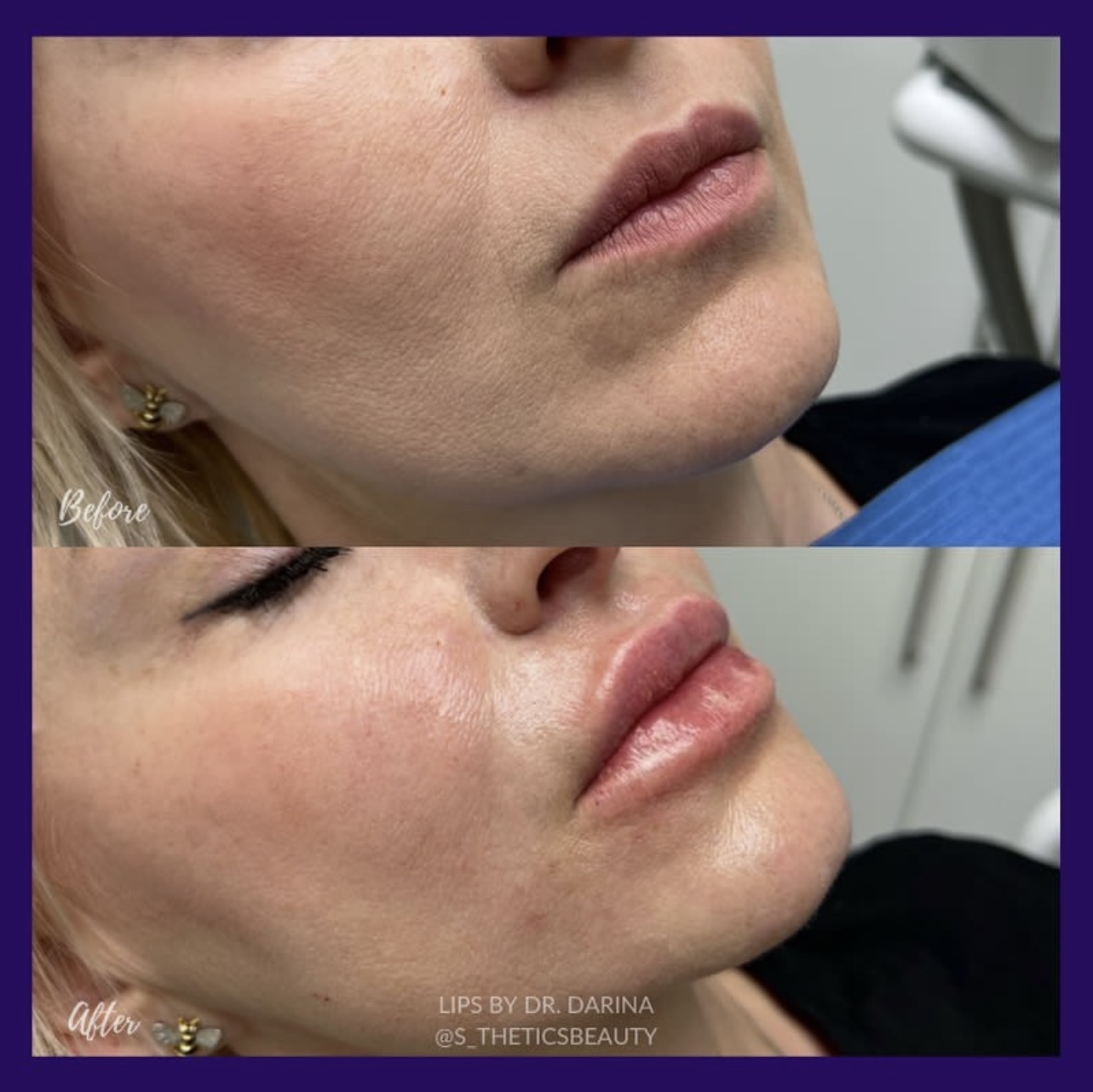
Hyaluronic acid dissolution at S-thetics Beauty uses hyaluronidase enzyme injections to break down and reverse previously injected hyaluronic acid fillers — whether from S-thetics Beauty or another provider. Hyaluronidase is a naturally occurring enzyme that cleaves hyaluronic acid at the molecular level, causing the filler to dissolve within twenty-four to seventy-two hours. The treatment is used to correct overfilled areas, resolve filler asymmetry, address complications from previous injections (such as the Tyndall effect — a bluish discolouration from superficially placed filler), or fully reverse HA fillers where the client no longer wants the treatment. MDDr. Šanšašvili can also perform hyaluronidase as an emergency procedure to address suspected vascular compromise from filler — a rare but serious complication that requires immediate treatment. The dissolving process is typically complete within 48 to 72 hours, after which new filler can be placed if desired.
About this treatment
Hyaluronidase is a class of enzymes that catalyse the depolymerisation of hyaluronic acid — the sugar polymer backbone that gives HA fillers their gel-like structure. When injected in proximity to or directly into an existing filler deposit, hyaluronidase degrades the cross-linked HA chains in the filler, converting the solid gel into a soluble form that is cleared naturally by the tissue. The effect is rapid: within twelve to twenty-four hours of the…
At S-thetics Beauty, hyaluronidase dissolution is available for several clinical scenarios. Filler correction — where a previous treatment produced asymmetry, overcorrection, or an undesired aesthetic outcome — is the most common use. Tyndall effect correction addresses the blue-grey skin discolouration that occurs when HA filler is placed too superficially in thin-skinned areas such as the tear trough or lips; dissolving the superficial deposit resolves…
MDDr. Šanšašvili can also perform hyaluronidase dissolution as an urgent medical intervention if there is any suspicion of vascular occlusion — the rare but serious complication where HA filler inadvertently compresses or enters a blood vessel, compromising tissue perfusion. This requires high-dose hyaluronidase administered immediately to dissolve the obstructing filler; the fact that this capability is available at the clinic is a significant patient…
Good to know
- Mechanism
- Enzymatic depolymerisation of hyaluronic acid cross-links
- Onset
- Visible reduction within 12–24 hours; complete within 48–72 hours
- Applications
- Overcorrection, asymmetry, Tyndall effect, full reversal, vascular emergency
- Re-treatment wait
- Minimum 2 weeks before new filler can be placed
- Allergy note
- Patch test recommended for bee/wasp sting allergy history
Who is this for?
Unwanted or asymmetric previous filler results, Tyndall effect correction, full filler reversal, emergency vascular complication management
Preparation required
Disclose any known allergy to bee or wasp stings at consultation — a patch test may be performed first. Arrive with knowledge of the filler brand and approximate date of the previous treatment if possible. No new filler placement in the area for at least 2 weeks after dissolution.
About the clinic
Reviews, team and credentials
Independent review links and clinic-reported team information.
Clinical team
MDDr. Darina Šanšašvili is the sole aesthetic practitioner at S-thetics Beauty. She holds a dentistry degree from the 1st Medical Faculty of Charles University Prague, giving her a precise grounding in facial orofacial anatomy. She has completed specialist aesthetic training: a Diploma in Facial Aesthetics at the Instituto Javier de Benito in Barcelona, Spain — one of Europe's leading centres for injectable…
Languages: cs, en, ru, it, es
Treatment highlights
- Assessment of the existing filler deposit and dissolution strategy planning with MDDr. Šanšašvili
- Hyaluronidase enzyme injection to the target area via fine-gauge needle
+2 more items in What's included
From 3,500 Kč per session. Price reflects hyaluronidase product and the complexity of the area. Multiple sessions may be required to dissolve larger volumes of filler. Free consultation when combined with same-day procedure or follow-up treatment.