

Type
MRI Scan
Duration
30 min
What's included
4 deliverables in this treatment
- MRI lumbosacral spine examination on a 1.5T scanner
- Radiologist interpretation and written report
- Hearing protection during the scan
- Digital images on request
A magnetic resonance scan of the lumbosacral (lower-back) spine, one of the most commonly requested spinal studies, giving detailed views of the lumbar vertebrae, discs, spinal canal and nerve roots without ionising radiation. It is used to investigate lower-back pain, sciatica, leg pain or tingling, and suspected disc herniation or canal narrowing. The standard self-pay price covers the scan without contrast, and a radiologist decides whether contrast is needed; the appointment includes the scan and a written radiology report.
About this treatment
Magnetic resonance imaging of the lumbosacral spine examines the lower-back vertebrae, the intervertebral discs, the lower spinal canal and the nerve roots that travel down towards the legs, producing detailed soft-tissue images without ionising radiation. It is one of the most frequently requested MRI studies because it is so useful for investigating lower-back pain, sciatica, pain or tingling radiating into the buttock or leg, leg weakness, and…
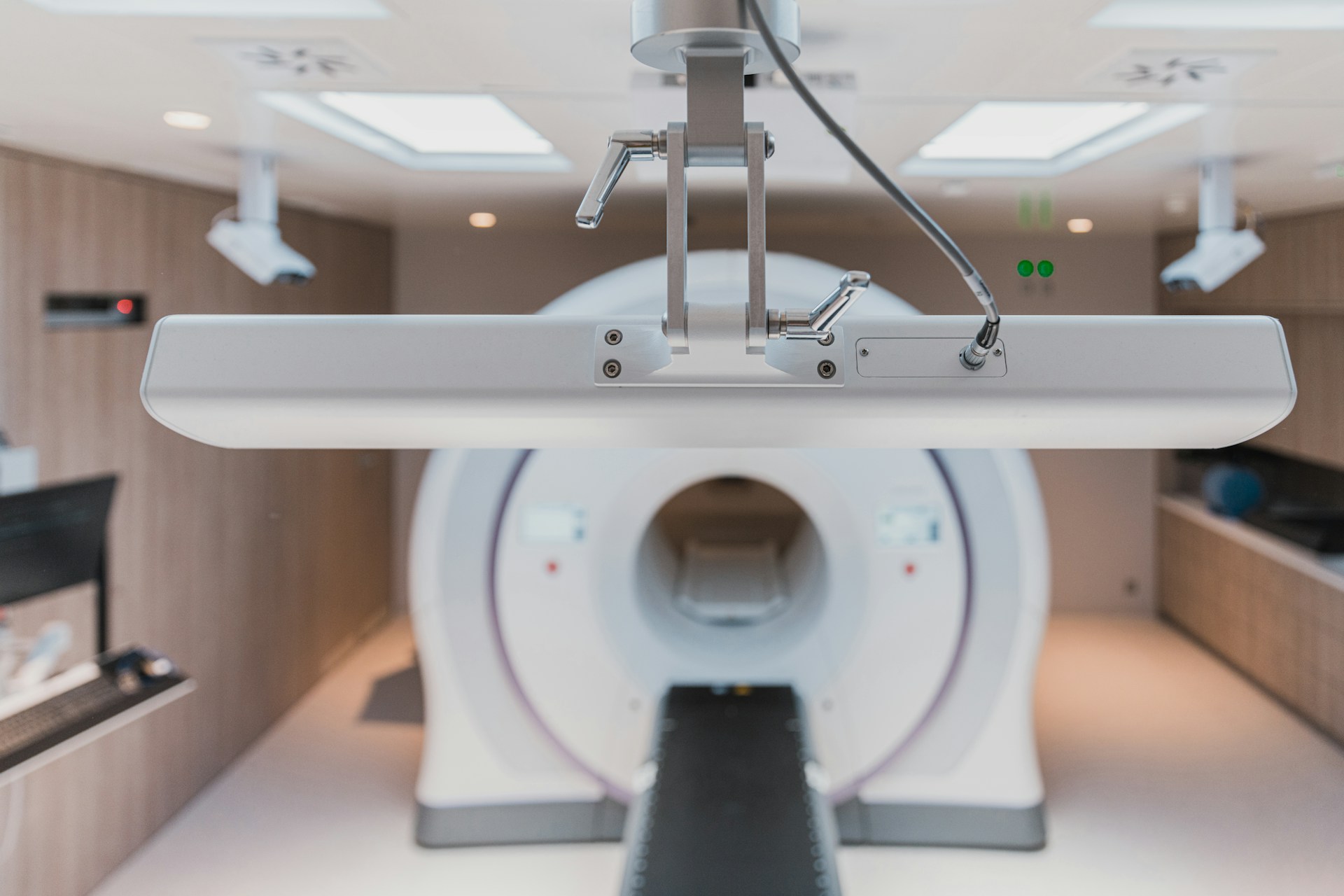
At Centrum Medyczne Zabobrze the scan is performed on a 2025 GE Signa Victor 1.5 Tesla system, whose AI-assisted imaging and wider, quieter bore are intended to keep the examination as comfortable as possible. A lumbar study usually takes around fifteen to sixty minutes; you lie on your back on the table with a coil over the lower spine and hearing protection on while the images are acquired. The published price covers the scan without contrast, and a…
Good to know
- Region
- Lumbosacral (lower-back) spine
- Scan time
- About 15–60 minutes
- Contrast
- Optional, radiologist's decision (+250 zł)
Who is this for?
Adults with lower-back pain, sciatica, leg pain or tingling, or suspected lumbar disc or canal problems
Preparation required
Avoid eating for about 4 hours beforehand, wear metal-free clothing, remove jewellery, watches and other metal items, and bring ID plus any previous imaging. Declare any implants, pacemaker or metal fragments when booking.
Scan details
- Body Area
- Lumbosacral spine
- Scan Type
- without contrast
About the clinic
Reviews, team and credentials
Independent review links and clinic-reported team information.
Clinical team
Magnetic resonance and CT examinations are described and reported by radiologists; a radiologist decides whether intravenous contrast is used for each study. Imaging is performed on a 2025 GE Signa Victor 1.5T MRI scanner and a Siemens SOMATOM go.Up CT scanner.
Languages: Polish
Treatment highlights
- MRI lumbosacral spine examination on a 1.5T scanner
- Radiologist interpretation and written report
+2 more items in What's included
690 zł for a lumbosacral (lower-back) spine scan without contrast. Intravenous contrast, if the radiologist decides it is needed, is an additional 250 zł, and a fast-tracked (CITO) report is an extra 150 zł.