



Type
Massage Therapy
Duration
1 hour
What's included
4 deliverables in this treatment
- Brief musculoskeletal and TCM assessment at session start
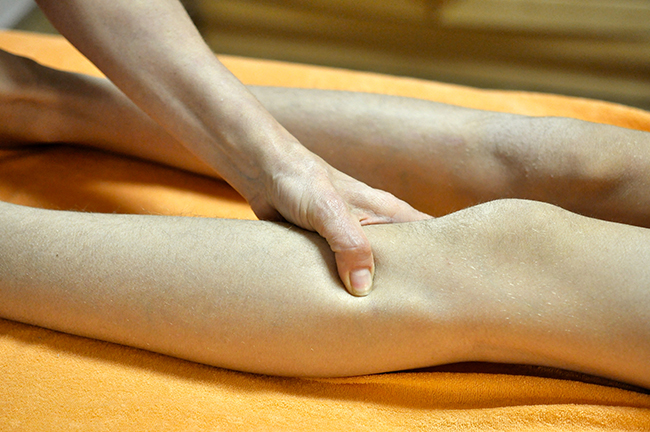
- Tuina bodywork using up to 25 distinct TCM hand techniques on targeted muscle groups and meridians
- Reflexology on feet or hands with organ-mapping zone stimulation
- Post-session treatment plan and recommended frequency
Tuina massage is a Traditional Chinese Medicine bodywork system with a 5,000-year history, using approximately 25 distinct therapeutic hand techniques to address muscle tension, joint stiffness, circulatory impairment, and musculoskeletal dysfunction. At this Brno practice, Eva Hajská integrates Tuina with reflexology — the stimulation of reflex zones on the feet, hands, and ears that correspond to internal organs and body regions. Unlike general relaxation massage, both techniques are diagnostic and therapeutic: the practitioner identifies imbalances through tissue texture, reflex point sensitivity, and patient feedback, then applies targeted manual therapy to resolve them. This approach is clinically appropriate for a wide range: acute and chronic musculoskeletal conditions, infants and elderly patients, pregnant women, athletes, and sports injury recovery.
About this treatment
Tuina (pronounced 'twee-nah', meaning 'push-grasp') is one of the five foundational branches of Traditional Chinese Medicine, alongside acupuncture, herbal medicine, diet therapy, and qi gong. It is a structured therapeutic massage system that uses a repertoire of approximately 25 distinct hand techniques — including rolling, kneading, pressing, rubbing, percussion, and traction — applied to meridian pathways, acupuncture points, and musculoskeletal…
At Celostní medicína a Akupunktura Brno, Tuina is combined with reflexology — a complementary technique working through reflex maps on the feet (most commonly), hands, or ears. In reflexology, specific zones on the sole and dorsum of the foot correspond to every organ and body region; applying precise thumb-walking, rotation, and pressure techniques to these zones stimulates the corresponding organ's function and circulation, and can identify areas of…
The combined session begins with a brief assessment of posture, movement limitation, and the patient's primary complaint. For whole-body or systemic complaints, the reflexology component often takes precedence, with foot or hand work forming the first 20–30 minutes; for localised musculoskeletal problems, Tuina bodywork on the affected region is primary. Pressure is calibrated to individual tolerance — from light to firm — and the practitioner…
Good to know
- Technique tradition
- 5,000-year TCM lineage
- Hand techniques
- ~25 distinct Tuina methods
- Combined with
- Foot/hand reflexology
- Patient range
- Infants, elderly, pregnant, athletes
Who is this for?
Chronic and acute musculoskeletal pain, sports recovery, stress and tension, elderly and infant care, pregnancy-related back and pelvic pain
Preparation required
Wear loose comfortable clothing. Avoid a heavy meal within 2 hours. Bring socks for the reflexology component.
About the clinic
Reviews, team and credentials
Independent review links and clinic-reported team information.
Clinical team
Eva Hajská is the sole practitioner at this practice. She completed a 4-year programme at the School of Natural Medicine Prague (2009–2013) covering TCM, acupuncture, iridology, reflexology, phytotherapy, and astropsychology, followed by a Western phytotherapy course (2011–2013) and postgraduate studies including clinical phytotherapy, ethics therapy, auriculotherapy, and dietetics (2013–2014). A further 3-year…
Languages: cs
What clients say
"{"author":"M.H.","text":"Chronic neck and shoulder pain that had plagued me for years, combined with digestive problems, disappeared after Eva's sessions. Both problems resolved — I'm genuinely grateful.","source":"celostni-medicina.com/reference"}"
"{"author":"A.V.","text":"A displaced cervical vertebra and knee arthritis — after Eva's treatment I was completely pain-free and had full mobility restored. The results exceeded what I thought possible.","source":"celostni-medicina.com/reference"}"
Treatment highlights
- Brief musculoskeletal and TCM assessment at session start
- Tuina bodywork using up to 25 distinct TCM hand techniques on targeted muscle groups and meridians
+2 more items in What's included
900 Kč per initial consultation (60 min). Follow-up sessions 800 Kč. Social discounts 15–20% for eligible groups. Not covered by Czech public health insurance — direct payment only.