


Type
Blood Testing
Duration
45 min
Results
1 hours
Sample
Capillary blood (fingertip prick)
What's included
5 deliverables in this treatment
- Capillary blood sample collection (fingertip prick)
- Real-time dark-field microscopy examination (20–30 min)
- Physician narration and real-time findings explanation
- Written summary of findings and health assessment
- Treatment protocol recommendations based on results
Hemoskenování (live blood analysis) at Aura Medical Clinic uses dark-field microscopy to examine a single drop of capillary blood in real time — without fixation, staining, or laboratory processing delays. The physician observes erythrocytes, leukocytes, and platelets as they move under the microscope, assessing cell morphology, aggregation patterns, and plasma characteristics that can reveal oxidative stress, inflammatory burden, nutritional deficiencies, and immune system activity. The technique is used at the clinic as a rapid diagnostic window into the patient's current health status and as a basis for planning integrative treatment protocols. A follow-up control session 4–8 weeks after starting treatment allows direct comparison of blood cell behaviour to assess treatment response. The examination takes approximately 45 minutes including the physician review and explanation.
About this treatment
Live blood analysis — known in Czech as hemoskenování — is a functional diagnostic technique used at Aura Medical Clinic as part of its integrative medicine assessment toolkit. The method provides a real-time window into blood cell biology that complements standard laboratory blood counts, offering qualitative information about cell health, oxidative state, and immune activity that fixed-slide haematology does not capture.
How the examination works.
A single small drop of blood is obtained from a fingertip capillary prick. The sample is placed immediately onto a microscope slide without fixation or staining and examined under dark-field illumination, which makes cells appear bright against a dark background and renders even very fine structural details visible. The examining physician observes the sample for 20–30 minutes, analysing erythrocyte (red blood cell) morphology, flexibility, and…
Good to know
- Method
- Dark-field microscopy, live sample (no fixation)
- Sample
- Single capillary blood drop
- Assesses
- Erythrocytes, leukocytes, platelets, plasma quality
- Follow-up
- Control session 1,200 Kč
- Duration
- ~45 minutes including physician review
Who is this for?
Integrative health baseline assessment, oxidative stress screening, treatment response monitoring, pre-protocol planning
Preparation required
No fasting required. Avoid heavy exercise and alcohol for 24 hours before examination.
About the clinic
Reviews, team and credentials
Independent review links and clinic-reported team information.
Clinical team
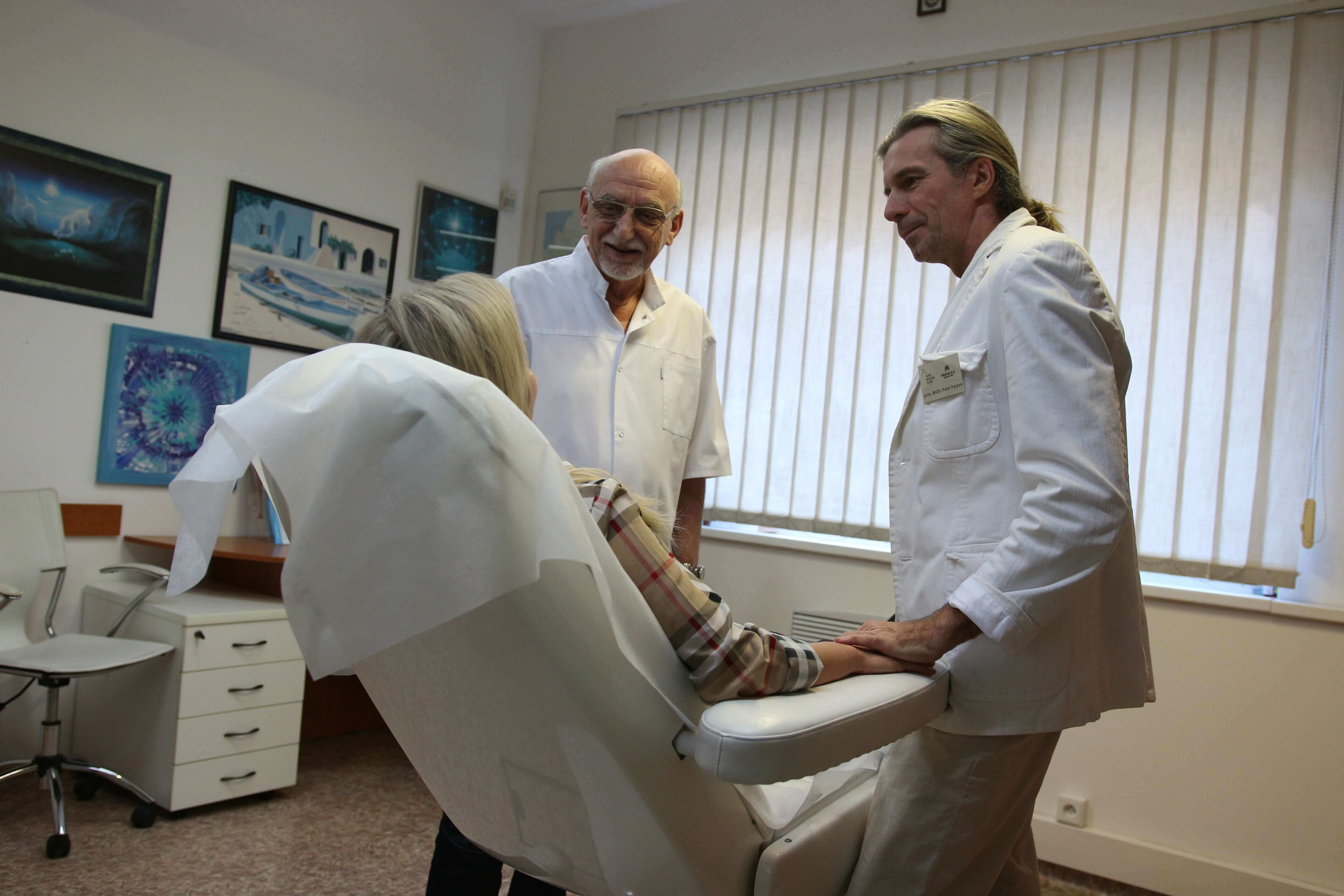
MUDr. Peter Hajduk (director, orthopaedics-traumatology, manual medicine, surgery — Charles University Hradec Králové 1991) leads a multidisciplinary team including Doc. MUDr. Jozef Fedeleš, CSc. (plastic surgery), MUDr. Mária Hlavatá (dermatovenereology), MUDr. Emílie Junková (acupuncture and dermatology), MUDr. Milan Veselý (holistic medicine), and Prof. Peter G. Fedor-Freybergh (psychotherapy, external…
Languages: cs, sk, en
What clients say
"{"author":"Patient via estheticon.cz","text":"I am very happy with the work of MUDr. Hajduk and the whole team. I always leave satisfied with his services.","date":"2017-01-01","source":"estheticon.cz"}"
"{"author":"Patient via znamylekar.cz","text":"I would very much like to thank MUDr. Hajduk and the whole team for a job well done. If you are planning a procedure, this is the right address.","date":"2013-06-01","source":"znamylekar.cz"}"
Treatment highlights
- Capillary blood sample collection (fingertip prick)
- Real-time dark-field microscopy examination (20–30 min)
+3 more items in What's included
Single hemoskenování examination 1,500 Kč. Follow-up control session 1,200 Kč. No advance consultation fee required — results reviewed with the physician immediately after examination.